
If you are on a GLP-1 medication like semaglutide or tirzepatide, you have probably noticed that food just does not call to you the way it used to. That is the point. These drugs work in two main ways: they slow gastric emptying so food sits in your stomach longer and you feel full sooner, and they act on receptors in the brain (the hypothalamus and brainstem) that regulate hunger signals. A lot of people describe this second effect as the “food noise” going quiet. The constant background thoughts about eating, the cravings, the mental pull toward the fridge. Gone, or at least much softer.
That is genuinely useful. But it creates a problem that does not get talked about enough, especially for people who are also trying to stay strong or get stronger.
When appetite drops, the first things to go are usually not the easy snacks. They are the meals that take effort to prepare. Protein-heavy meals, the ones built around chicken, eggs, ground beef, cottage cheese, or fish, tend to require more planning and more cooking than grabbing something convenient. So when someone stops feeling hungry and stops feeling motivated to cook, protein is often what gets skipped first.
The result is that someone can be eating significantly less overall while also eating a worse ratio of protein to everything else. The scale might be moving, but what is actually being lost is worth paying attention to.
The goal of using a GLP-1 is not just to see the number on the scale go down. It is to make sure that what you are losing is fat, not the muscle you have worked hard to build.
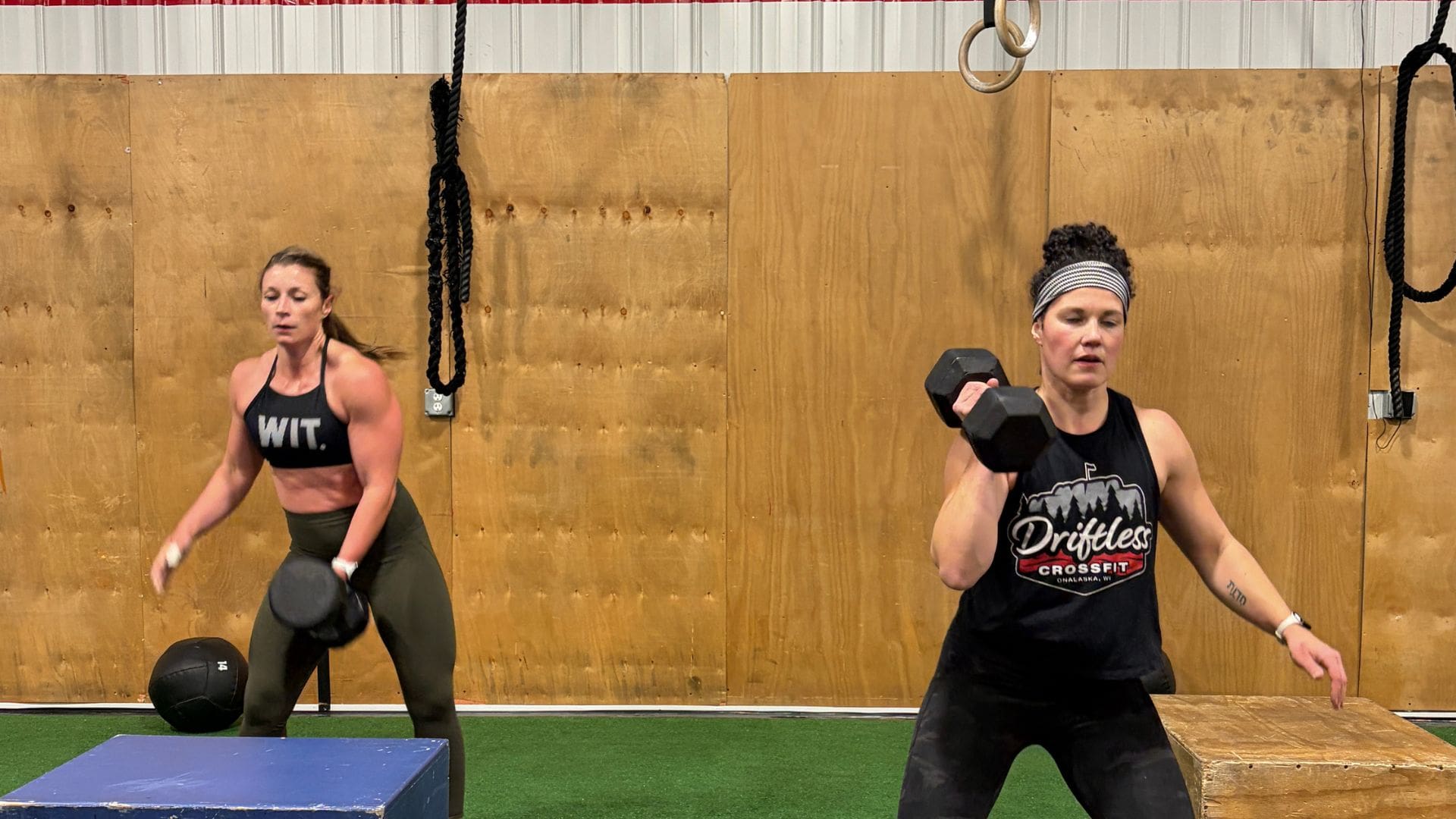
Two things protect that muscle: eating enough protein even when your appetite is telling you to eat less, and continuing to strength train even when you feel smaller and think you do not need to push as hard. Your body only keeps muscle it thinks you need. Lifting sends the signal that you still need it. Without that signal, and without enough protein coming in, the body has no reason to hold onto muscle tissue. It will use it for fuel instead.
When you eat protein, your body has a choice to make. It can use that protein to build and repair muscle, or it can burn it for energy or store it away like any other fuel. Strength training is what tips that decision in your favor. A training session creates demand. Your muscles have been worked, they need repair, and when protein arrives, the body prioritizes using it for that repair. Without the training stimulus, protein is just another calorie source competing with everything else. This is why the combination matters. Protein alone helps, and training alone helps, but together they are what actually preserve and build lean mass during a period of reduced intake.
A reasonable target is 0.7 to 1 gram of protein per pound of body weight per day. For a lot of people on GLP-1s, hitting that number feels harder than it used to because the appetite just is not there to drive eating.
A few approaches that tend to work:
-Protein first, always. At every meal, eat the protein source before anything else on the plate. If fullness hits fast, the protein is already in rather than being the thing you did not get to.
-Front load the day. Appetite is often a little better earlier in the day, so a protein-heavy breakfast can matter more than it used to. Do not save your protein for dinner if you are not going to be hungry by then.
-Use liquid protein as backup, not replacement. A protein shake can help close the gap on days when solid food feels like too much, but it should not fully replace whole food protein. Whole food sources also support satiety and nutrient variety in ways a shake does not.
-Smaller, more frequent meals over three big ones. If you can only manage small amounts at a time, five small protein-forward meals often gets more total protein in than three meals you cannot finish.
-Choose higher protein density foods. Eggs, cottage cheese, Greek yogurt, and lean meats pack more protein into less volume than a big salad or a bowl of soup. When stomach capacity feels smaller, density matters.
For members pairing GLP-1 use with a training program, we recommend three to five sessions per week with an emphasis on strength and skill work over pure conditioning. When energy is lower and food intake is reduced, conditioning-heavy days can feel brutal and recovery can lag. Strength work tends to be more sustainable and more protective of muscle during this period.
A week might look something like this:
- Monday: Strength-focused, full intensity if energy allows
- Tuesday: Conditioning, scaled as needed
- Wednesday: Rest or light active recovery
- Thursday: Strength or gymnastics skill work
- Friday: Conditioning
- Saturday: Longer or partner format (the social element on this day matters)
- Sunday: Rest
The first few weeks can feel a little uneven. Energy fluctuates, appetite is unpredictable, and it can be hard to know how hard to push. Modify workouts as needed. There is no shame in reducing weight or reps while your body adjusts.
Track the wins that matter early: clothes fitting differently, movements feeling more controlled, strength holding steady as body weight drops. These are signs the approach is working.
If you can stay consistent with protein and get in at least three strength focused sessions per week, most people start to notice real progress within four to six weeks. Not dramatic, but real and measurable.
If you are in the Onalaska area and want to talk through how to structure training around what you are already doing with your medication, we are happy to have that conversation at Driftless CrossFit.

