
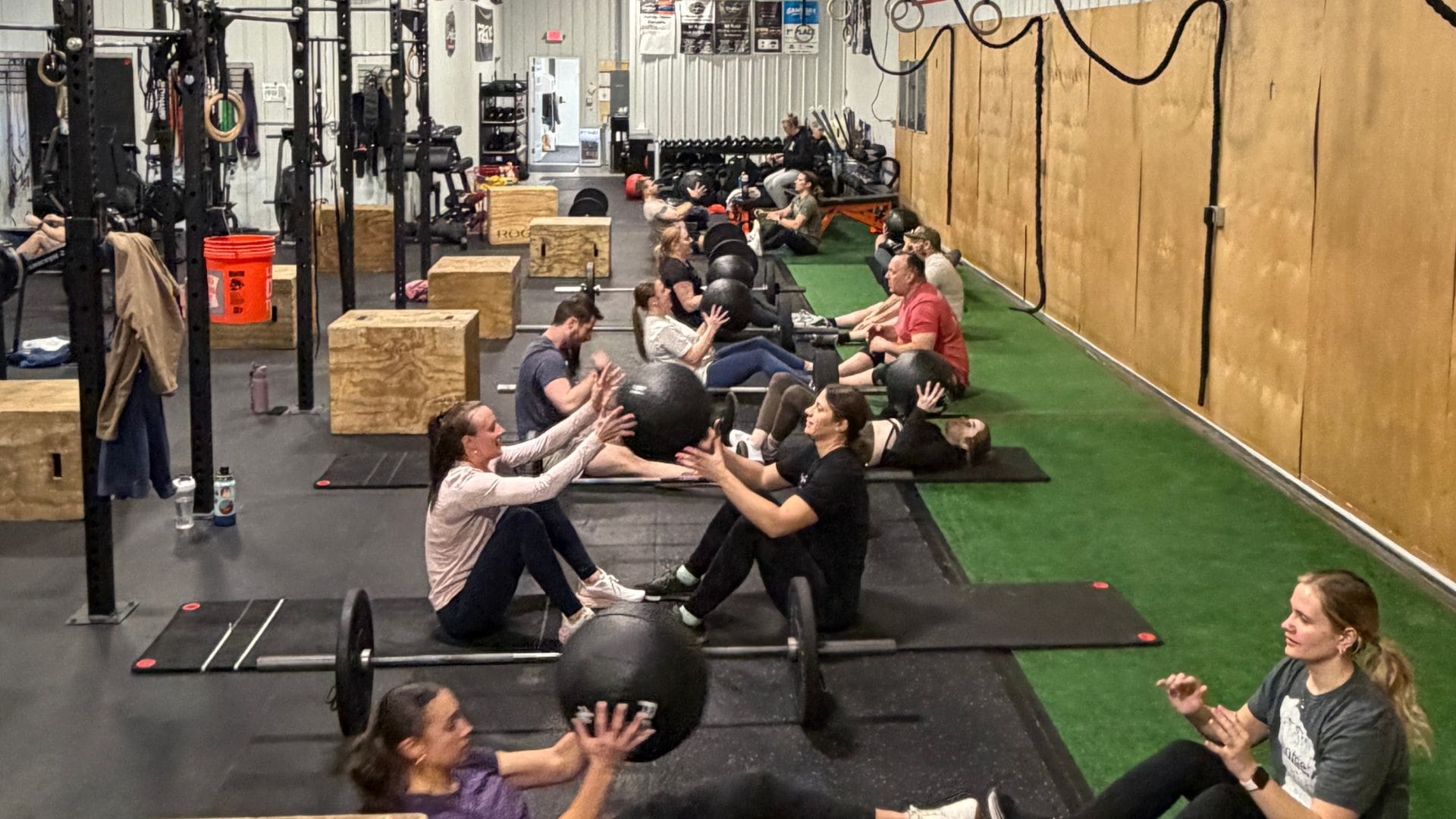
If you are new to class and worried that scaling means you are behind, you are not alone. It is one of the most common concerns we hear from people who want to try fitness classes in Onalaska, WI but feel like they can’t start. Scaling is a normal coaching tool, and this article explains what it is, how it works, and what to tell a coach before you walk in.
Why Scaling Feels Like Falling Behind (and Why It Isn’t)
We all need to start somewhere. And we need to start in a position that allows us to keep coming to the gym. Through consistent attendance and effort, we build strength and skills. Our bodies also become more ready for cardio.
We are always trying to hit the stimulus that is intended for the workout. Sometimes that means we need to adjust the workout to where we are at for the day.
What Scaling Actually Means in a Class
The stimulus should stay the same when we scale a workout. A goal may be a number of rounds, or finishing in a certain amount of time. To meet that goal, we adjust the movements and possibly the reps. The workout keeps its purpose. The way you get there changes.
Fitness Classes in Onalaska, WI: One Workout, Many Versions
In our classes, everyone works on the same workout, just at different levels. Our coaches help members decide what may be a good fit for them. We also list beginner, scaled, Rx, Rx+, and Comp options for most days and workouts, so you can see the choices ahead of time and think about where you want to be before class starts.
How a Coach Decides What to Adjust
Our coaches typically know our athletes well. They know what skills someone is still working on, and what skills someone has down and may need to be challenged on. For weights, we often give percentages, or a goal for the number of sets that the reps should be completed in.
We may need to adjust more on the day itself. Maybe there is an injury, a member didn’t sleep well, or they have a lot of stressors going on right now. Those things count, and a good coach takes them into account.
Examples of Scaling: Load, Movement, Volume, and Pace
Here are the main things a coach can change:
- Load (weight)
- Volume (repetitions or distance)
- Movement
- ROM (range of motion)
- Timing
- Feel
Any of these can be adjusted to keep the workout doing what it was meant to do.
Scaling Applies to Experienced Athletes Too
You can scale up or down depending on the day. Experienced athletes may be looking for better recovery, may not have slept well, or may have a competition coming up. Some go back to basics to dial in technique and strength in strict movements. So if you see a veteran athlete scaling, that is usually a choice with a reason behind it.
Why You Should Cycle Through Different Scaling Options
When we are building a new skill, it is important to work on its different components, so it helps to use a number of scaling options. If we always do banded kipping pull ups, that is exactly what we will get good at. If we add jumping pull ups, banded strict pull ups, pull up negatives, ring rows, inverted rows, and so on, we build strength in many different capacities.
What to Tell Your Coach Before Your First Class
Share your injuries, any concerns, your previous experience in sports or fitness, and your goals. That gives your coach what they need to point you toward a version of the workout that fits.
If you have been putting off trying a class because you are afraid of scaling, tell a coach that too. Reach out to Driftless CrossFit when you are ready, and we will help you figure out a good starting point.

